physicsbanner.gif

Integrated Programme (Through-Train)


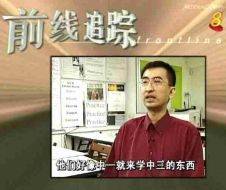
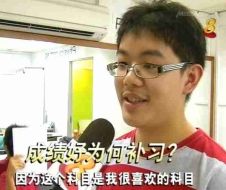
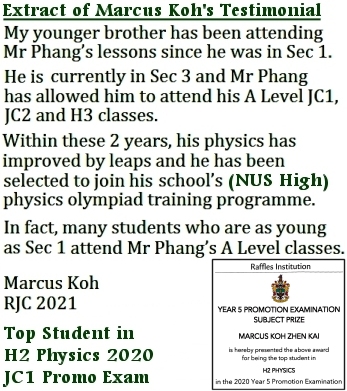
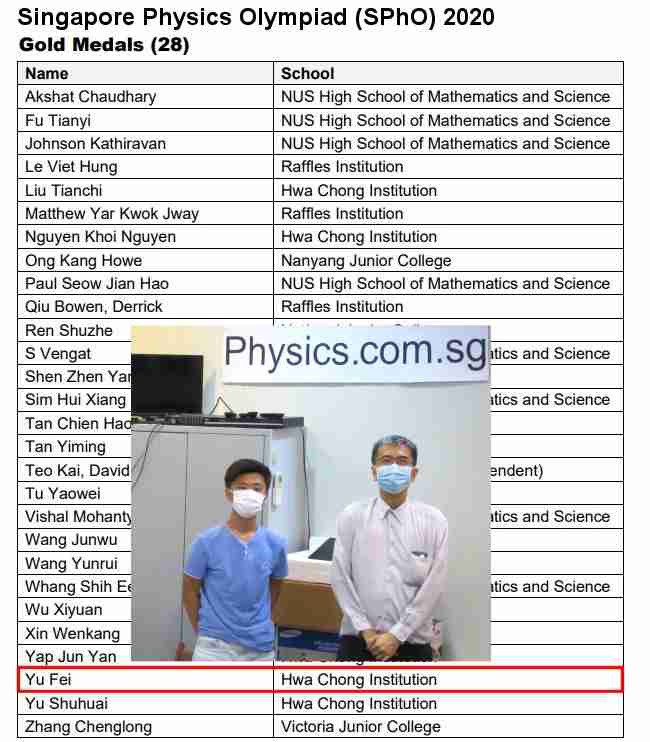
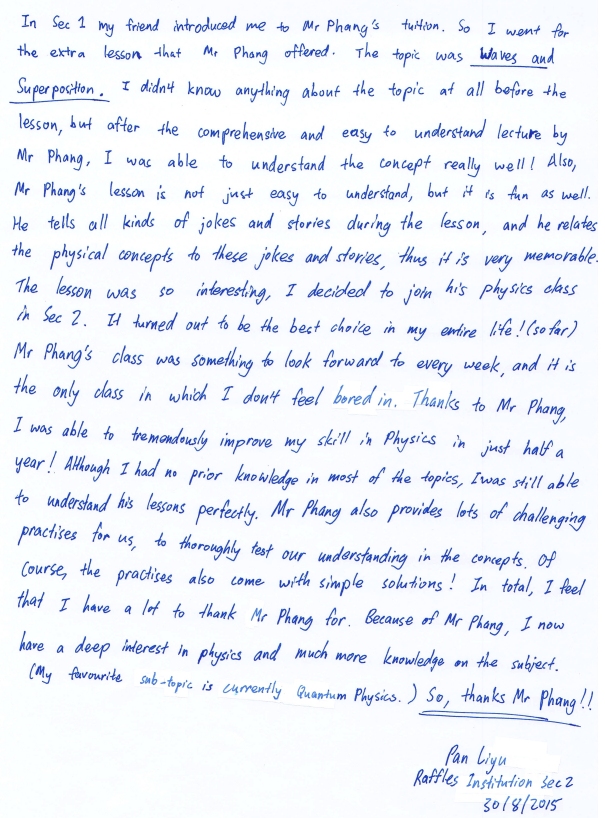
With the elimination of the G.C.E. 'O' Levels, I.P. students interested in learning beyond their syllabus and having a head start over their peers have enrolled for higher level physics tuition classes conducted by Mr. Phang.

This phenomenon began only after the implementation of the through-train I.P. programmes and the scrapping of the 'O' levels for these students.

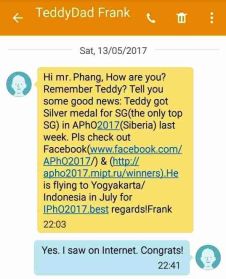
Initially, Mr. Phang was concerned whether these younger students could cope with advanced level knowledge. However, such concerns proved unfounded as these child prodigies regularly finished solving physics problems ahead of the class.

Age, or rather the lack of it, does not seem to be an impediment in the understanding of physics.


Child Progidies

While most I.P. Sec 3 and 4 students still attend Mr. Phang's Sec 3 and 4 physics tuition classes respectively, more are now attending JC1 and 2 tuition classes.

There are also Sec 1 and 2 students in Mr. Phang's Sec 3 and 4 tuition classes.

As an educator, Mr. Phang feels that it is important a student be allowed to learn at a level he/she is comfortable with.

It will be inhuman to force an average Sec 4 student to study 'A' level physics; but it will be equally inhuman to force a prodigious Sec 4 student, who could already handle quantum mechanics, to still study basic mechanics 'F = ma', 'F = ma', 'F = ma' ...

Fortunately, with the implementation of the I.P., many schools have discovered the solution to this age-old problem with their own accelerated programmes, as had many parents.

What types of students are able to handle 'accelerated' higher level physics classes? After doing a survey amongst his students of their PSLE scores , Mr. Phang observed that these students fall into two categories:

1.    All students with PSLE score above 270.

2.    Students with PSLE score between 250 and 270 (with A* in Maths and Science).

This could be seen from the examples below.


Case of a Family with Four Children

Mr. Phang has a valued client who sent her four very brilliant children to his physics tuition classes.

The two eldest daughters studied at NUS High while the two youngest sons study at RI.

The eldest daughter was in Sec 3 when she attended Mr. Phang's JC1 tuition class in 2005. Despite being two years younger, she could complete physics problems ahead of all other students in the tuition class except her classmate from NUS High. Anyway this classmate of hers could solve physics problems ahead of all same-aged students in Singapore (see the 'Chainsaw' below).

The second eldest daughter was also in Sec 3 when she attended Mr. Phang's JC1 tuition class in 2006, together with some of her school mates. She was able to complete physics problems ahead of the whole class, despite being two years younger.

The second youngest son is in JC1 and attends Mr. Phang's JC2 class. Despite being one year younger, he could complete physics problems ahead of all other students in the tuition class except his junior - a Sec 4 boy from RI (see the 'Hot Knife' below).

The youngest son is in Sec 3 and attends Mr. Phang's Sec 4 class. He is able to complete physics problems ahead of the whole class, despite being one year younger.


Case of 'Acceleration 1.5'

'Acceleration 1.5' refers to a Sec 4 student from HCI who finds Mr. Phang's JC1 tuition class easy to follow but the JC2 tuition class a little too tough to manage, after trying out classes at both levels. His calibre is somewhere between JC1 and JC2.

In the end, he decided to stick with the JC1 tuition class and, despite being one year younger, finishes physics problems ahead of the rest of the class.

The wonderful thing about the I.P. is that students do not need to take the 'O' levels so they can choose to learn at any pace they are comfortable with.

It's like a buffet.


Case of the 'Hot Knife'

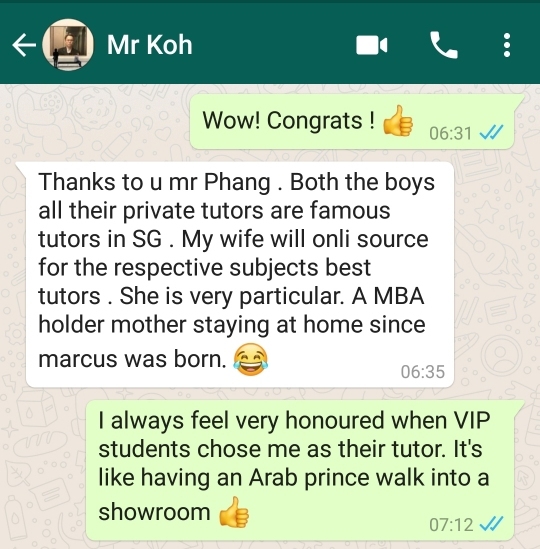
Mr. Phang has another valued client who sent her two very brilliant children to his physics tuition classes.

The elder daughter studied at  RGS and the younger son studies at RI.

The elder daughter attended Mr. Phang's Sec 4 tuition class in 2004. She was in the last batch of RGS students who took their G.C.E. 'O' levels, and graduated amongst the top of her cohort.

When the younger son entered RI in 2006 with equally sterling results, his mother enquired about Mr. Phang's physics tuition class. Knowing the calibre of his elder sister, Mr. Phang suggested that he attend the Sec 3 physics tuition class.

Initially, both his mother and Mr. Phang were concerned whether a Sec 1 student who had just completed PSLE could cope with Sec 3 level knowledge. However, such concerns proved unfounded as he regularly finished solving physics problems well ahead of the rest of the class, despite being two years younger.

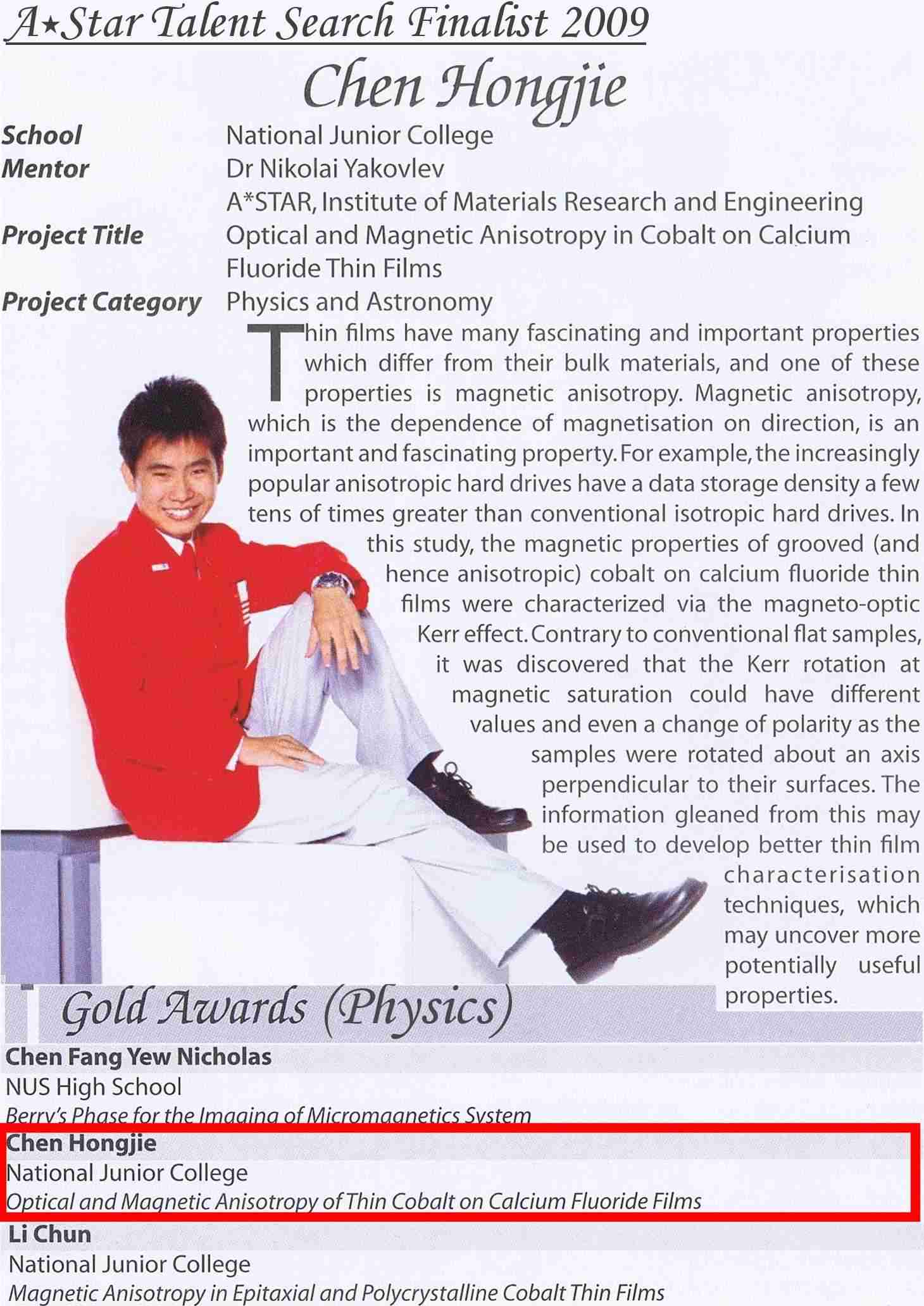
This student is now in Sec 4 and attends Mr. Phang's JC2 tuition class. Despite being only in Sec 4, he cuts through, like a hot knife through butter, top junior college questions, 'A' level special paper and even H3 level (equivalent to university first year) questions.


Case of the 'Chainsaw'

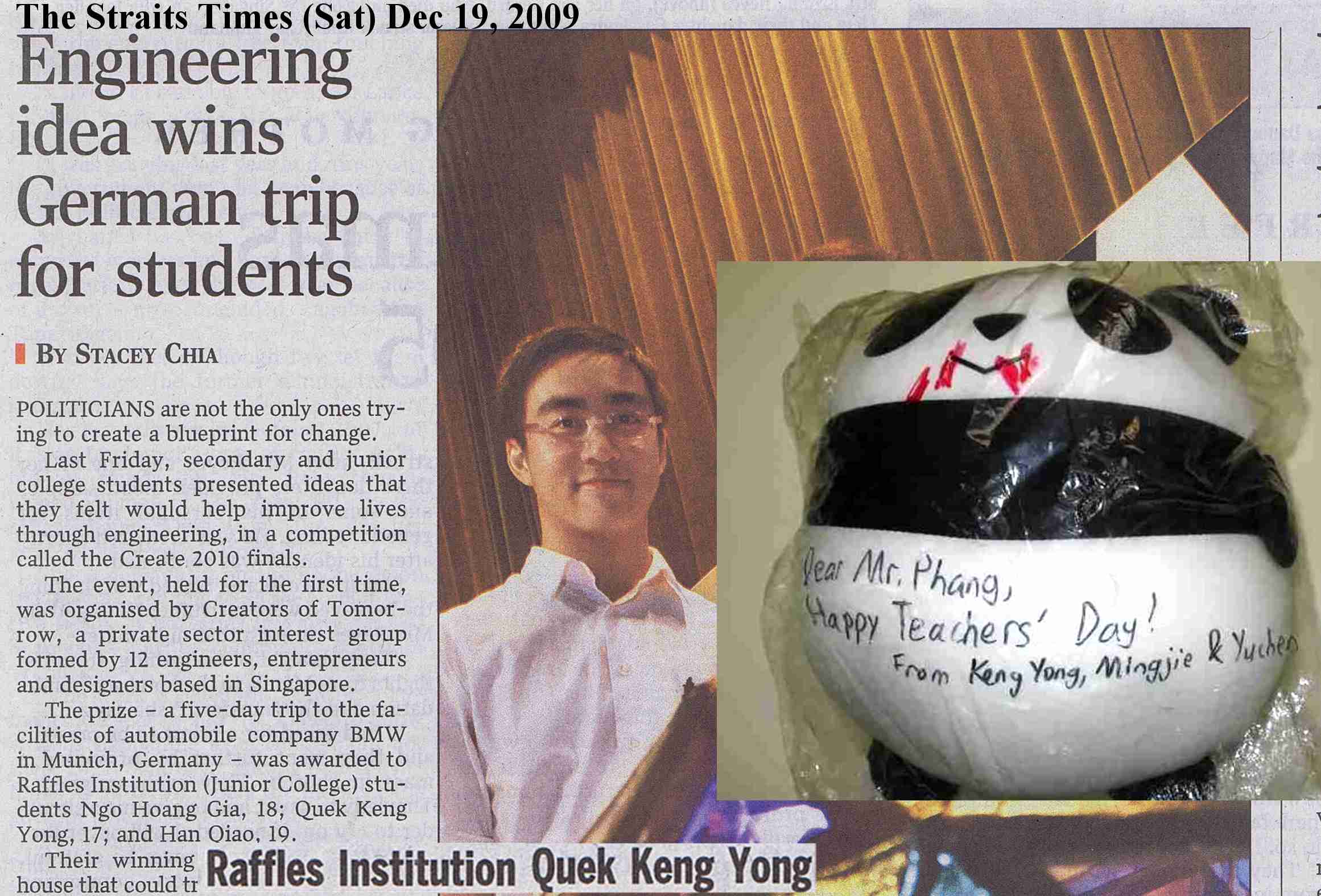
Mr. Phang had a Sec 4 student from NUS High who attended his JC2 tuition class in 2006.

Whenever Mr. Phang asked the class a question which the JC students could not answer, she would readily provide the answer. She also had a photographic memory and could remember verbatim everything Mr. Phang had said.

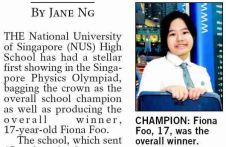
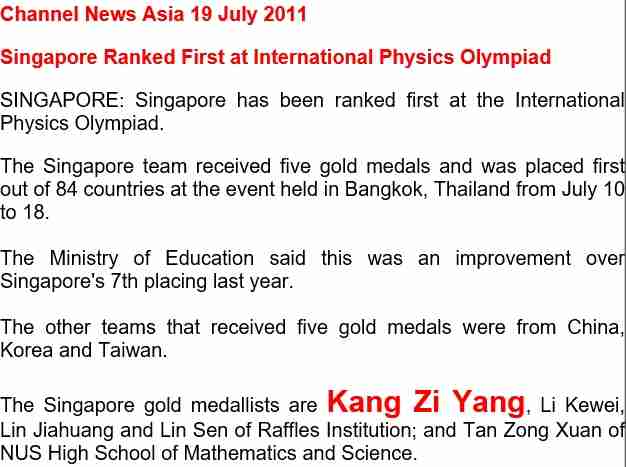
Despite being only in Sec 4, she cut through 'A' level special paper and top junior college questions like a chainsaw through butter.

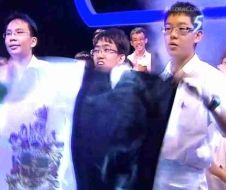
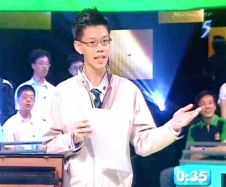
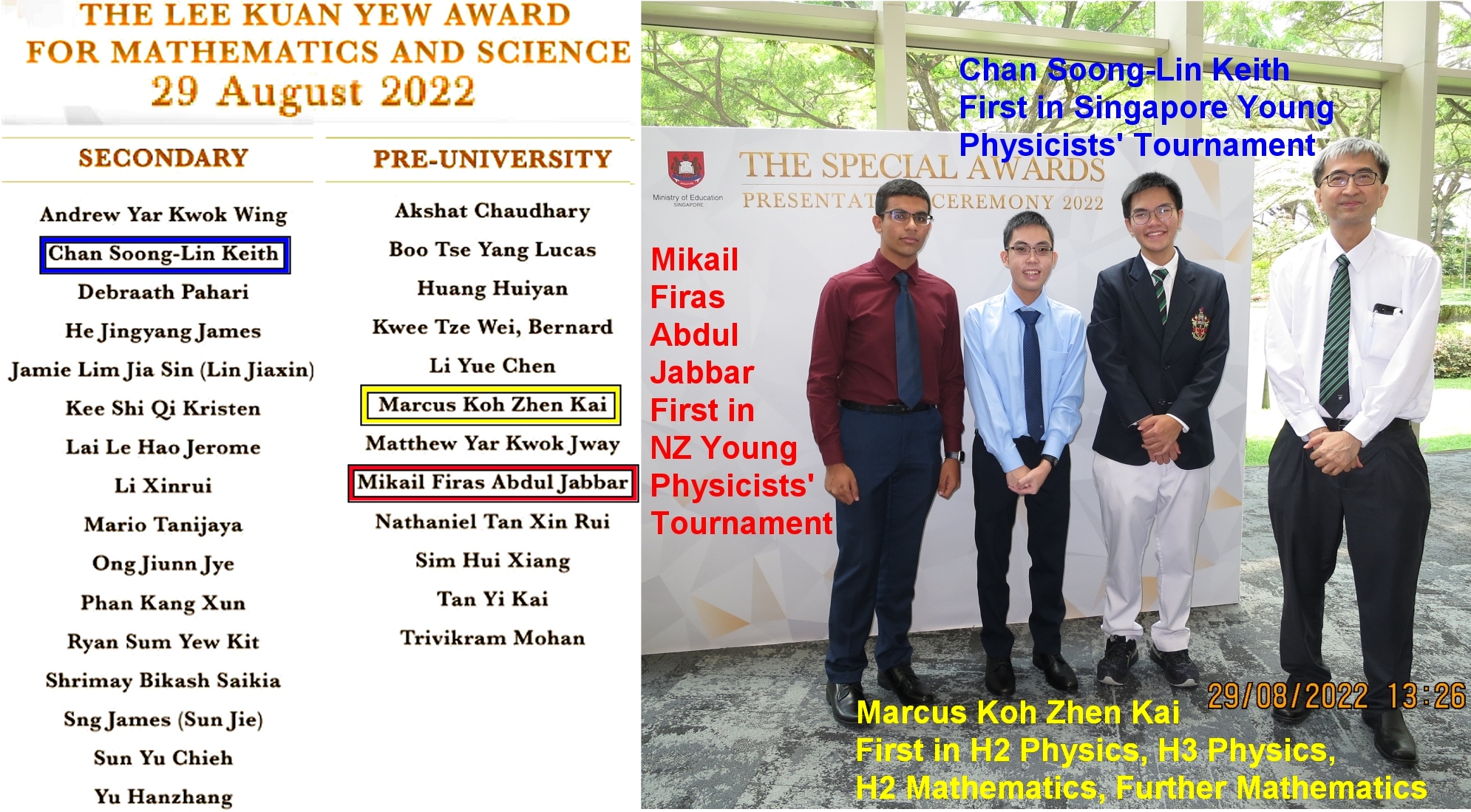
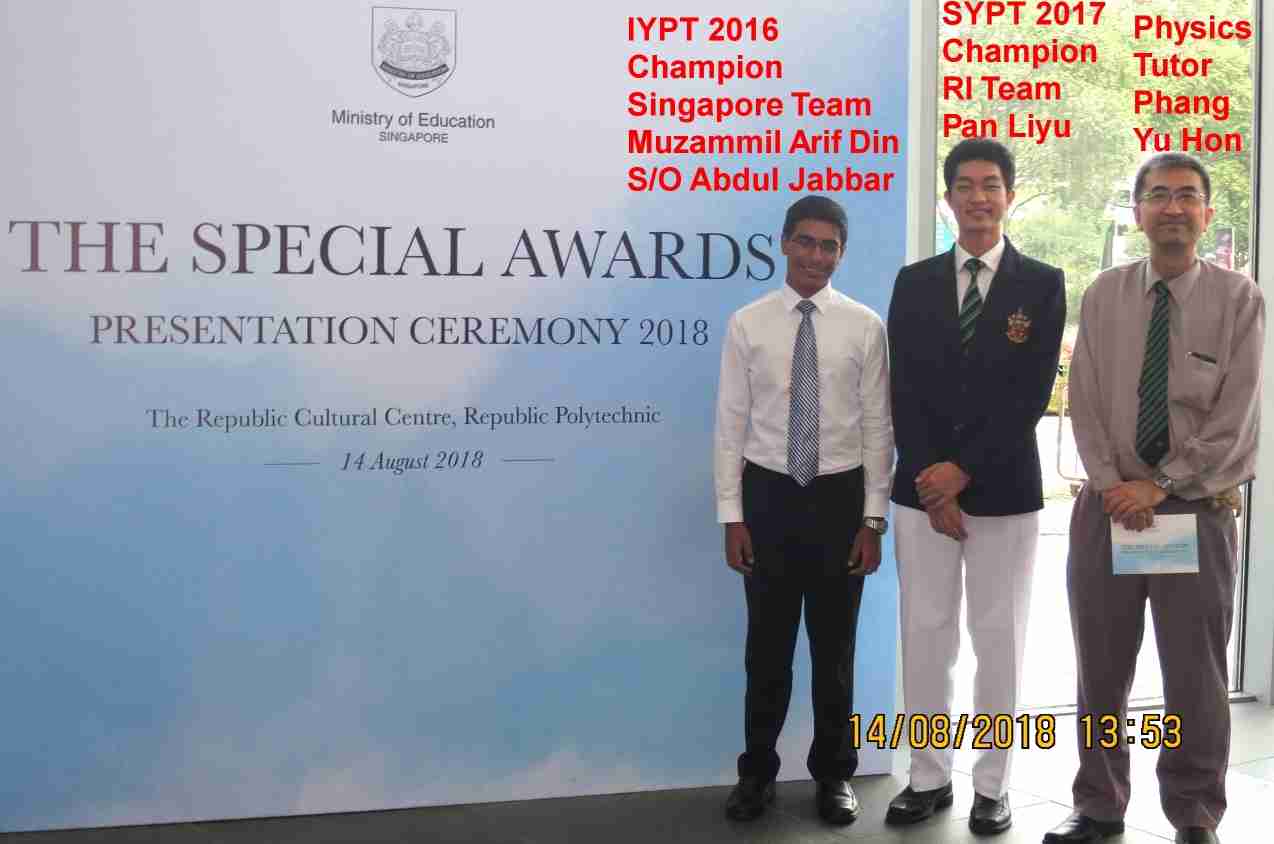
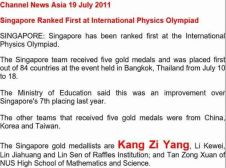
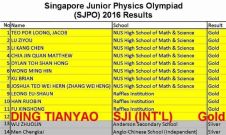
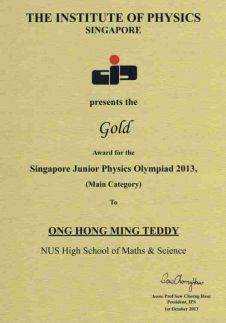
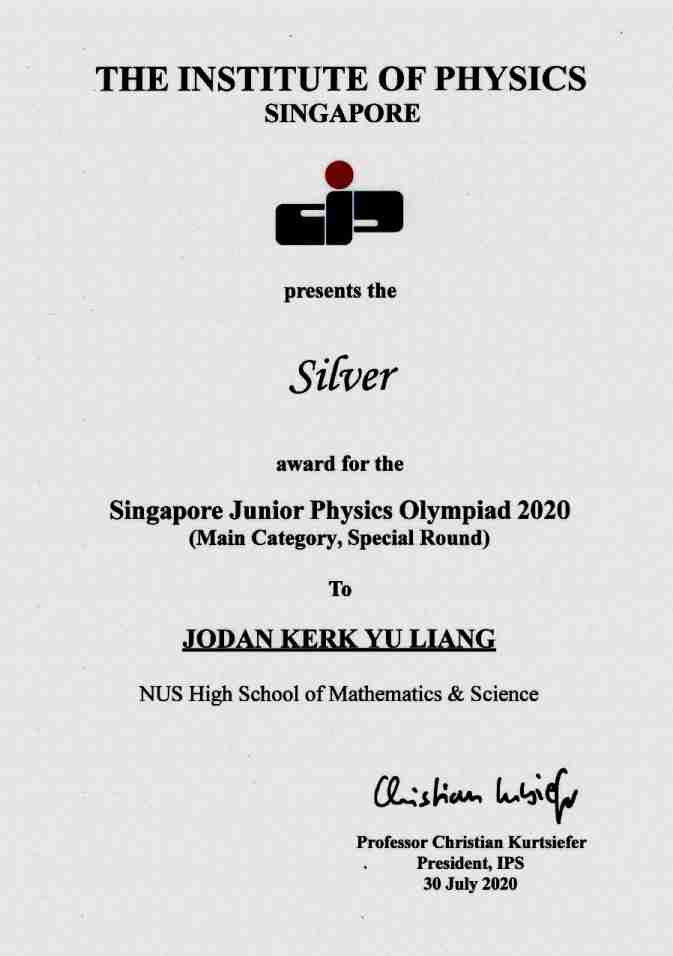
This student later went on to make history in Singapore's traditionally male-dominated physics competition landscape.


Case of the 'Mentor'

This is a Sec 3 student from RI who attends Mr. Phang's JC1 tuition class. Like the other mothers, his mother was initially also concerned whether he would be able to cope with higher level knowledge.

Again, this concern proved unfounded.

He became the 'Mentor' to some students he befriended in class, as he helped to explain to them how he would arrive at correct answers to physics problems.


Case of the 'Chainsaw II'

From an initial borderline pass, this Sec 3 NUS High student who attends Mr. Phang's JC1 tuition class had improved to top his class in his school's physics tests.

He now cuts through Mr. Phang's challenging questions like another chainsaw through butter.

Butter is a good lubricant, especially for chainsaws.


Case of the 'Walking Encyclopedia'

This was a Sec 4 student from RI who attended Mr. Phang's JC2 tuition class in 2006 and completed the entire 'A' level physics syllabus with Mr. Phang before entering RJC (as it was known at that time) in 2007.

In one instance when Mr. Phang was solving a physics problem and told the class that Mount Everest was 8,850 m high, he informed Mr. Phang that a more precise value would be 8,848 m, increasing at a rate of two inches per year.

In another instance when Mr. Phang explained to the class that radars do not radiate equally in all directions, he enlightened the class that Japan's Air Force had high intensity radar beams focused over an area of less than 1 cm2.

Mr. Phang and his class of JC students became more knowledgeable thanks to this 'Walking Encyclopedia'.


Physics 'Enrichment'

There are many other examples of such child prodigies, like Mr. Phang's former colleague's Sec 4 son from RI who also finished the 'A' levels with Mr. Phang before going to RI(JC) in 2009; five Sec 3 NUS High girls attending the JC1 tuition class; two Sec 2 RGS girls in the Sec 3 tuition class; two Sec 1 ACS(I) boys in the Sec 3 tuition class; two Sec 3 RGS girls in the Sec 4 class...

The implementation of the I.P. and skipping of the 'O' levels for top-tier students have opened up a new landscape in learning for these students.

For such students, their thirst for knowledge seems unquenchable and the term 'enrichment' would perhaps be more appropriate than 'tuition'.


backHOME.gif


© Copyright Physics.com.sg (Registration No. 52890077C).  All rights reserved.
® First Class in Physics Tuition is the Registered Trademark (TM No. T02/02149B) of Physics.com.sg
.