What Would Really Happen If You Fell Into A Black Hole
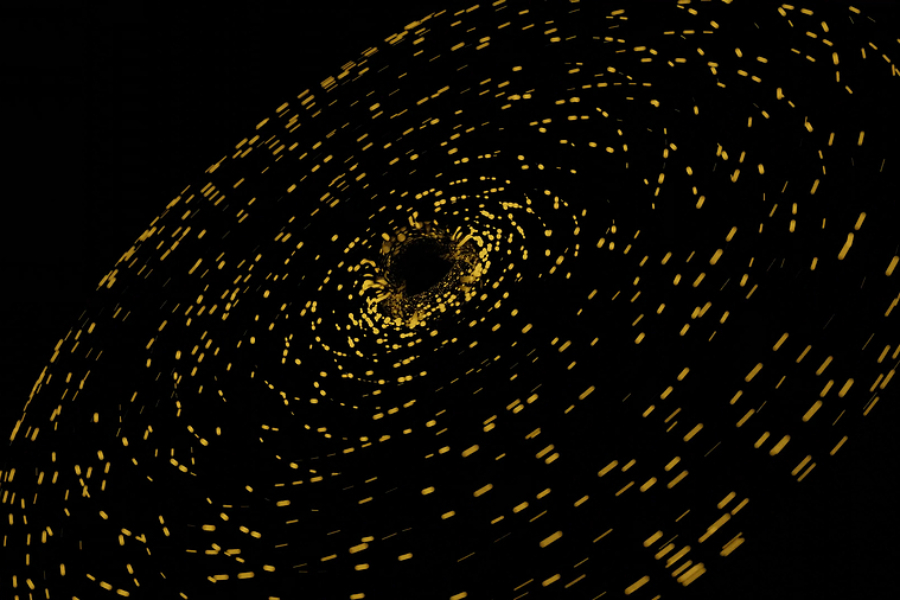
Black holes sit at the edge of what modern physics can explain. They are regions of space where gravity is so intense that not even light can escape, making them invisible except through their effects on surrounding matter. Popular culture often portrays falling into a black hole as instant destruction or a portal to another universe. The reality, according to physics, is both more precise and more unsettling.
Understanding what would truly happen requires ideas from gravity, relativity, and astrophysics that students often encounter in advanced secondary syllabuses. Concepts explored in H2 physics tuition frequently touch on the same foundations that help explain these extreme cosmic objects.
How Black Holes Are Formed
Black holes form when massive stars reach the end of their life cycles. Once nuclear fuel is exhausted, outward pressure drops and gravity causes the star to collapse. If the remaining mass is large enough, the collapse continues indefinitely, creating a point of extremely high density known as a singularity.
Surrounding the singularity is the event horizon, an invisible boundary. Crossing this boundary means there is no possible path back out, regardless of speed or direction. Importantly, the event horizon itself is not a solid surface. It is simply a point of no return defined by gravity.
Approaching The Event Horizon
From a distance, falling towards a black hole might initially feel unremarkable, especially if the black hole is very massive. You would not suddenly be crushed or burned the moment you crossed the event horizon.
To a distant observer, however, something strange occurs. Due to gravitational time dilation, your movements would appear to slow down as you approached the event horizon. Light emitted from your body would become increasingly redshifted, fading from view. From their perspective, you would never quite cross the boundary at all.
From your own point of view, time would feel normal. You would cross the event horizon without noticing anything special at that precise moment.
Spaghettification And Tidal Forces
The real danger lies in tidal forces. Gravity becomes stronger the closer you get to the singularity, but not evenly across your body. The gravitational pull on your feet would be much stronger than on your head.
This difference stretches you vertically and compresses you horizontally, a process known as spaghettification. For smaller black holes, this stretching would begin well before reaching the event horizon and would be fatal very quickly.
For supermassive black holes, such as those found at the centres of galaxies, tidal forces near the event horizon are much weaker. In theory, you could cross the event horizon intact, only experiencing extreme stretching much later as you approach the singularity.
What Happens To Time And Space
Inside the event horizon, space and time effectively swap roles. Moving towards the singularity becomes as unavoidable as moving forward in time. Just as you cannot stop time progressing, you cannot stop your motion towards the centre of the black hole.
This idea often challenges intuition but aligns with Einstein’s theory of general relativity. The equations predict that all possible paths inside the event horizon lead inevitably to the singularity.
Such concepts help students appreciate why physics sometimes defies everyday experience, a theme commonly explored when developing deeper understanding through physics tuition.
Can You See The Rest Of The Universe?
A common question is whether you could see the future of the universe as you fall in. While gravitational time dilation does allow you to see light from increasingly distant future events outside the black hole, this effect is limited.
You would not witness the entire future history of the universe in a flash. Practical limits such as the finite speed of light, intense radiation, and the short time before reaching the singularity prevent this dramatic scenario.
The Fate At The Singularity
At the singularity, density and spacetime curvature become infinite, according to current theories. The laws of physics as we know them break down, and scientists cannot yet describe what truly happens there.
Some theories suggest that quantum gravity effects may prevent an actual infinite point, while others speculate about connections to other regions of spacetime. These ideas remain theoretical and untested, highlighting the limits of modern physics.
Why Black Holes Matter In Physics Education
Black holes are not just science fiction curiosities. They provide real-world applications of gravity, energy, motion, and relativity. Studying them encourages critical thinking and mathematical reasoning, especially at advanced levels.
Topics such as gravitational fields, escape velocity, and relativistic effects form the backbone of senior physics education. Exploring extreme examples like black holes helps students see how these principles scale beyond everyday situations.
Conclusion: Physics At Its Most Extreme
Falling into a black hole would not be an instant or mysterious disappearance. It would involve measurable physical processes predicted by well-tested theories, from time dilation to tidal stretching and the inevitable pull towards the singularity.
While no human experiment can confirm these predictions directly, black holes continue to shape our understanding of the universe and the limits of physical law. For students curious about how classroom physics connects to cosmic phenomena, resources and guidance from educators are invaluable.
To explore more fascinating physics topics and deepen conceptual understanding, visit Physics.com.sg and discover how structured learning can make even the most extreme ideas accessible and engaging.