5 Fun and Exciting Physics Activities for Chinese New Year
Chinese New Year is a season of colour, celebration and curiosity. Lanterns glow, drums thunder, mandarin oranges roll across tables, and families gather to welcome a fresh start. Beyond the festive treats and traditions, this vibrant holiday is also a wonderful opportunity to explore the science quietly at work behind the scenes.
Physics does not live only in textbooks or laboratories. It lives in the sparkle of fireworks, the rhythm of a lion dance and even the flight of a paper lantern. For students preparing for major exams, including those attending O-Level physics tuition, connecting concepts to everyday life can make learning feel meaningful and memorable.
Here are five fun and exciting physics activities you can try this Chinese New Year, each one rooted in celebration and powered by science.
Build And Test A Mini Paper Lantern Glider
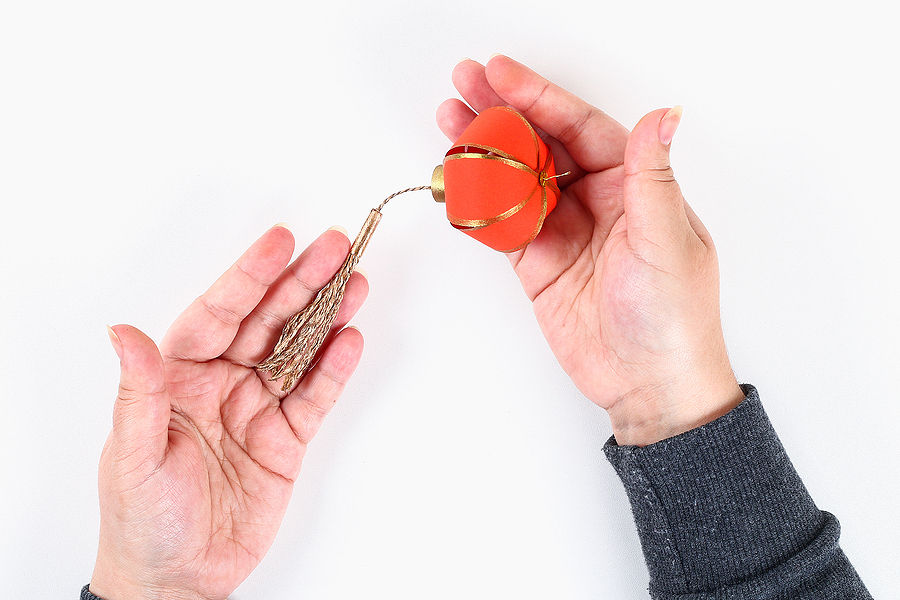
Lanterns symbolise light, hope and new beginnings. This year, turn that symbolism into a hands-on aerodynamics challenge by creating a mini “lantern glider”.
Using lightweight paper, design a lantern-shaped glider with extended side panels acting as wings. Attach a small paper clip at the bottom to adjust its centre of mass. Then test how far it can glide when launched gently from a height.
Students quickly discover that:
- A lower centre of gravity improves stability
- Larger surface areas increase air resistance
- Symmetry affects flight direction
The activity introduces core principles such as drag, lift and balanced forces. Instead of memorising definitions, students observe how subtle design changes affect motion. That “aha” moment, when a glider suddenly flies straighter, builds intuition in a way worksheets cannot.
Parents can even turn it into a friendly family competition: whose lantern glider travels the furthest distance?
Explore Sound Waves With DIY Festival Drums
The thunderous beat of drums during lion dance performances is not just exciting; it is physics in action. Sound is produced by vibrations travelling through the air as sound waves. You can demonstrate this at home using a simple drum experiment.
Stretch cling wrap tightly over a large bowl and secure it with a rubber band. Sprinkle a few grains of uncooked rice on top. Then tap the surface lightly with your fingers or a chopstick.
As the surface vibrates, the rice grains bounce visibly. Increase the force of your tap and the rice jumps higher.
This simple activity illustrates:
- Vibrations as the source of sound
- The relationship between amplitude and loudness
- Energy transfer through a medium
For students revising wave topics, physically seeing vibrations makes abstract diagrams far easier to understand. Physics teachers often encourage such demonstrations because visual learning reinforces theoretical understanding.
Next time a lion dance drum echoes through the neighbourhood, students may find themselves thinking not just about the celebration, but about frequency and wave propagation too.
Investigate Projectile Motion With Mandarin Oranges
Mandarin oranges are everywhere during Chinese New Year. Their round shape makes them perfect for a safe and controlled projectile motion experiment.
Place a small basket a short distance away. Gently roll or lightly toss an orange towards the target, adjusting your angle each time. Record which angle sends it the furthest distance.
With careful observation, students can explore:
- The effect of launch angle on range
- The role of gravitational acceleration
- The difference between rolling and projectile motion
Although full mathematical treatment may be reserved for upper secondary levels, even younger learners can appreciate that a 45-degree launch (in ideal conditions) often produces maximum range.
The best part? The activity feels like a festive game rather than a lesson. Learning becomes playful, and physics becomes approachable.
Discover Static Electricity With Red Packets
Red packets (hongbao) symbolise blessings and prosperity. They can also demonstrate static electricity in a simple yet magical way.
Cut small pieces of tissue paper and scatter them on a table. Rub a red packet vigorously against wool fabric or dry hair for about 20 seconds. Then bring the packet close to the tissue pieces without touching them.
Watch as the tissue jumps up and sticks to the packet.
This phenomenon occurs because rubbing transfers electrons between materials, creating opposite charges that attract. Students can learn about:
- Electrostatic forces
- Attraction between opposite charges
- The concept of electric fields
The excitement of seeing paper leap into the air often sparks curiosity: why does this happen? That question is the gateway to deeper exploration.
Linking festive items to electricity helps students see physics not as a dry subject, but as a powerful explanation of everyday mysteries.
Simulate Firework Physics With Safe Light Experiments
Fireworks are a highlight of many Chinese New Year celebrations around the world. While actual fireworks should only be handled by professionals, the underlying physics can be explored safely at home.
Turn off the lights in a room and use a small torch or LED light. Shine it through coloured transparent plastic sheets or cellophane. Experiment with overlapping colours and observe how light changes.
Students can investigate:
- Refraction of light through materials
- Additive colour mixing
- The behaviour of light intensity
For an added challenge, create tiny pinholes in cardboard and shine light through them onto a wall. Notice how light travels in straight lines and forms patterns.
Understanding light behaviour prepares students for topics like reflection, refraction and wave properties. When they next watch fireworks burst into colourful patterns, they may think about energy transformations from chemical potential energy to light and sound energy.
Why Festive Physics Matters
Festivals are powerful because they bring families together. Learning becomes even more impactful when it happens in that warm and supportive environment.
Students often struggle with physics because it feels abstract. Equations can seem detached from reality. However, when children realise that the same principles explain lanterns gliding, drums booming and red packets attracting tissue paper, the subject becomes alive.
Hands-on activities:
- Strengthen conceptual understanding
- Build curiosity and critical thinking
- Encourage family bonding through shared discovery
- Reduce fear of complex topics
Rather than asking, “Will this be tested?”, students begin asking, “Why does this happen?” That shift in mindset is transformative.
Turning Celebration Into Confidence
Confidence in physics does not come from rote memorisation alone. It grows from experience, such as observing, experimenting and connecting ideas to the world around us.
Chinese New Year provides the perfect setting for these experiences. A simple glider becomes a lesson in forces. A drum becomes a demonstration of waves. A red packet becomes proof of electric charge.
For students preparing for national examinations, especially those working hard to strengthen their foundations through structured guidance, blending festive fun with revision can ease stress and build motivation.
Physics should feel empowering, not intimidating.
Keep The Curiosity Going
Festive activities may last a few days, but curiosity can last a lifetime. When students learn to see physics everywhere, they develop stronger analytical skills and a deeper understanding.
Families who wish to continue nurturing this curiosity can explore more structured resources, enrichment programmes and guidance tailored to Singapore’s curriculum. Physics.com.sg offers comprehensive support designed to make learning clear, engaging and effective for students at every level.
Visit Physics.com.sg to discover more practical tips, learning strategies and insights that turn challenging topics into achievable goals.
This Chinese New Year, may your home be filled with laughter, prosperity, and perhaps a little physics magic too.