World Animal Day: How Bats Use Sound Waves to Navigate
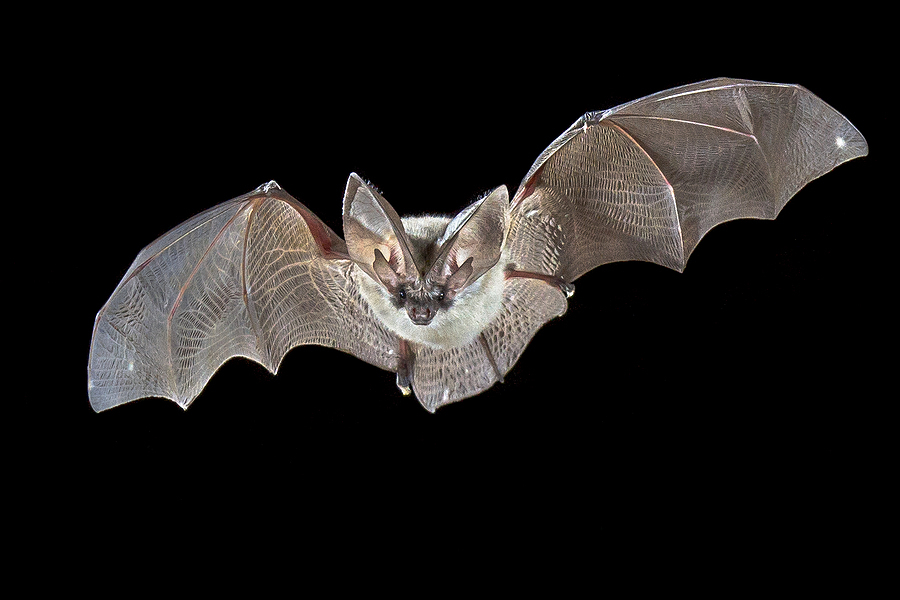
Twilight brings out some of the most fascinating creatures of the night. Bats, often misunderstood and overlooked, navigate with astonishing precision in complete darkness, relying on a natural form of sonar known as echolocation. Their ability to interpret sound waves to detect obstacles and hunt prey is not only remarkable in nature but also a fascinating demonstration of physics principles in action. These insights are invaluable for students studying sound and waves.
Understanding Echolocation
Echolocation is the natural sonar that enables bats to “see” with sound. They emit high-frequency pulses, often beyond the range of human hearing, which travel through the air until they hit an object or prey. These pulses then bounce back as echoes. By interpreting the timing, intensity, and frequency of the returning sound, bats build a detailed mental map of their surroundings. This allows them to detect obstacles, locate prey, and even distinguish textures.
This process illustrates fundamental physics concepts such as wave propagation, reflection, and frequency modulation. Observing how bats use these principles can make abstract topics much clearer, which is why many students benefit from examples like this when learning through physics tuition.
How Bats Measure Distance and Direction
Bats rely on two crucial aspects of echoes: time delay and frequency shifts. The time it takes for an echo to return tells them how far an object is, while changes in frequency caused by the Doppler effect indicate whether the object is moving toward or away from them. These principles are the same ones students encounter in lessons on sound waves and motion.
Some bats can even detect objects as fine as a human hair or prey the size of an insect. The precision of this system is a remarkable illustration of physics applied in nature, highlighting how timing and wave frequency can provide critical information about the environment.
Anatomy That Makes Echolocation Possible
Several adaptations allow bats to navigate with such accuracy:
- Vocal structures: Bats produce ultrasonic pulses through their larynx. Some emit calls through the mouth, others through specialised nostrils.
- Highly sensitive ears: Bats can change the shape of their ears to detect subtle differences in returning echoes.
- Sound beam control: Features such as nose-leafs or lip shapes help direct and focus their sound pulses for greater precision.
These anatomical traits work together to allow bats to navigate complex environments like dense forests or narrow cave systems.
Why High-Frequency Sounds Are Essential
High-frequency sound waves have short wavelengths, which allows bats to detect extremely small objects with precision. While lower frequencies travel farther, they provide less detail, making them less effective for hunting insects or avoiding obstacles. This explains why most echolocating bats rely on ultrasonic frequencies, often beyond the reach of human ears.
Adapting Echolocation to the Environment
Bats do not rely on a single fixed call. They adjust their echolocation depending on the situation:
- Increasing pulse rate when closing in on prey to receive more frequent feedback.
- Shortening pulse duration to prevent echo overlap near obstacles.
- Frequency modulation versus constant frequency: Different species adopt strategies that best suit their hunting or navigation needs.
This adaptability shows how physics principles are applied dynamically in real-time, allowing bats to maintain efficient navigation in changing conditions.
Recent Research on “Echo Space”
Recent studies combining behavioural experiments and acoustic simulations have shown that bats create a perceptual “echo space.” As they fly, they gather a multitude of echoes, including complex reflections and diffracted sounds. Over time, bats refine their spatial awareness, learning where obstacles are likely and adjusting flight paths before new echoes even return.
This discovery highlights the interplay between learning, perception, and physics, demonstrating how experience improves a bat’s ability to navigate safely and efficiently.
Differences Between Bat Species
Not all bats echolocate in the same way. Microbats are specialists in echolocation, while many megabats depend more on vision and scent. Environmental conditions—like humidity, air temperature, and the density of obstacles—affect how far sound travels and how accurately bats can detect prey or avoid collisions. Understanding these limits provides a practical example of wave attenuation, absorption, and energy loss, core concepts in physics education.
The Physics Behind Echolocation
Echolocation is a living demonstration of physics in action. It involves wave propagation, reflection, the Doppler effect, acoustic attenuation, beam formation, and rapid neural processing. Students can see how timing, frequency, and amplitude translate into detailed environmental awareness. Observing these systems in nature makes abstract concepts tangible.
Conclusion
World Animal Day is an opportunity to celebrate the remarkable ways animals interact with the world around them. Bats exemplify how physics principles underpin natural navigation systems. By using high-frequency sound pulses, interpreting echoes, adjusting calls, and building mental maps of their surroundings, they convert physics into an essential survival tool.
For students and enthusiasts, bats offer a fascinating glimpse into how scientific principles operate outside the classroom. To explore more physics phenomena, including waves, sound, and motion, visit Physics.com.sg for in-depth resources and guidance.