Why HDB Lifts Don’t Drop: Physics in Counterweights
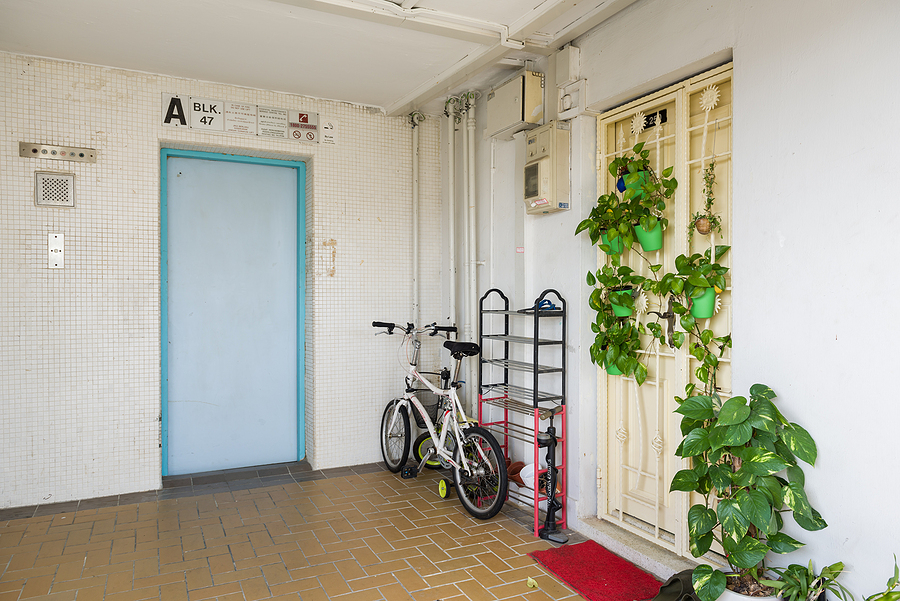
Modern apartment blocks in Singapore, particularly HDB flats, feature lifts that seem deceptively simple. Yet the underlying physics that keeps these lifts stable, safe and efficient is both elegant and crucial.
The concepts of force balance, inertia, and energy conservation play key roles in keeping every ride smooth and secure. These are the same foundational principles often explored during Physics tuition, especially when learning about mechanics in real-world applications.
What is a counterweight and why is it used
A counterweight is simply a weight that balances the mass of the lift car plus a typical passenger load. In HDB lifts, like most traction elevators, the counterweight is engineered to equal the weight of the car plus about 40 % of its maximum passenger capacity. By doing so, the system stays near equilibrium. This design dramatically reduces the load on the motor, since it only needs to overcome friction and inertia, not the full gravitational pull of a heavy car.
How physics keeps the lift stationary
When the counterweight matches the car load, gravitational forces on each side of the pulley are balanced. As a result, there is virtually no net force causing motion. Friction in the rails and pulleys prevents the system from drifting. The only time the motor intervenes is to initiate movement or brake the descent or ascent, rather than continuously supporting the car's weight.
The role of energy and inertia
Even in a perfectly balanced system, inertia resists changes in motion. The motor must supply force to overcome that inertia to start or stop movement. Because the lift is balanced, the energy required is minimal compared to lifting the full mass of the car and passengers. Any energy input primarily goes into overcoming friction or accelerating the system, not supporting a heavy weight.
Why the lift doesn’t suddenly plummet
Without a counterweight, a passenger-heavy lift could indeed drop at high speed if braking failed. But with counterweights, the system resists sudden imbalances. Braking systems and safety governors further prevent free fall. As the car descends, the counterweight ascends in a controlled way, and any excess energy is dissipated through mechanical brakes or hydraulic dampers. This symmetric exchange ensures that neither side can accelerate uncontrollably.
Balancing act: calculating counterweight mass
Engineering standards specify that counterweights are sized carefully. Typically they match the car mass plus about 40 % load, and often include safety factors to account for extremes. This ensures that during heavy passenger loading or off-peak half loads, the system remains stable. If the car is lighter than its counterweight, it will ascend slowly; if heavier, it will descend at controlled acceleration due to design limits.
How the system responds under different load scenarios
With full load, the counterweight is slightly lighter so the car descends gently; with minimal load, the counterweight wins and the car ascends gently. In both scenarios, the motor intervenes only briefly to control acceleration. Exceptional mechanical fail-safes such as governor systems, rail buffers and automatic braking ensure passenger safety even in rare cases of rapid unbalanced motion.
How maintenance and monitoring supports safety
HDB’s Telemonitoring System (TMS), launched in 1984, tracks lift status in real-time; issues like abnormal vibrations, door faults or unusual acceleration trigger alerts to maintenance teams automatically. This remote monitoring ensures the entire system, including counterweight performance, is kept in optimal condition, further eliminating risk.
Real-world reliability in HDB lifts
The Lift Upgrading Programme (LUP) that began in 2001 ensures that older HDB blocks are fitted with modern lifts stopping at every floor, upgraded control systems and properly balanced counterweight systems. As a result, residents experience smooth, safe lifts that rarely malfunction or “drop” unexpectedly.
Key benefits of counterbalanced lift systems
- Energy efficiency: significantly less motor power needed
- Wear reduction: friction and mechanical stress remain low
- Reliability: equilibrium design resists uncontrolled motion
- Safety: braking systems and balanced loads drastically limit fall risk
Conclusion
The physics principles that prevent HDB lifts from dropping revolve around equilibrium, energy minimisation and force balance. Counterweights make lift systems efficient, safe and easy to control. Understanding these mechanisms reveals how everyday engineering draws from core physics concepts. For students preparing for exams or curious to learn more about mechanics, forces, and real-world applications, Physics tuition can bridge the gap.