Physics Lessons Hidden in Singapore’s Modern Architecture
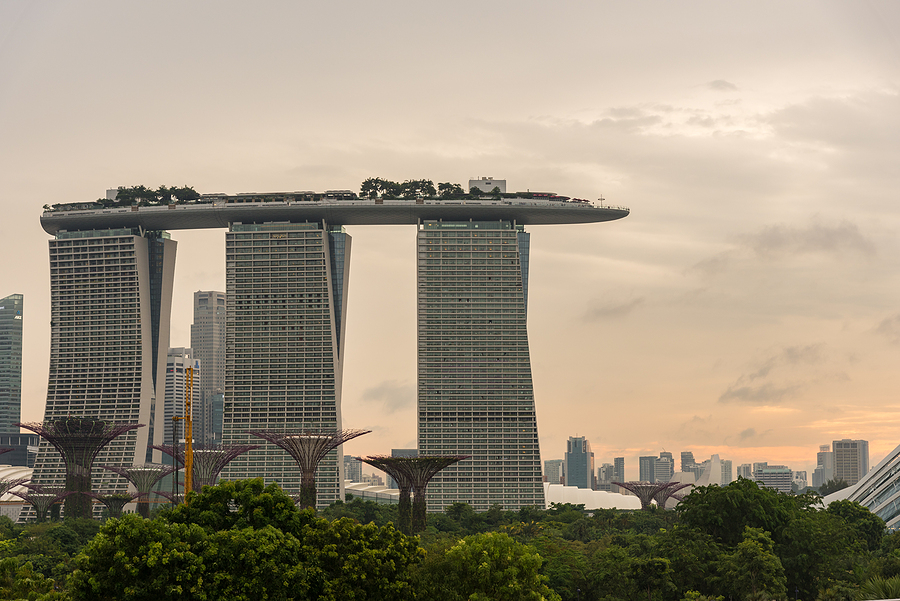
Singapore is a city celebrated for its striking skyline, innovative urban planning, and modern architectural marvels. Beyond their aesthetic appeal, many of these structures are excellent case studies for real-world physics principles. Observing the city’s skyscrapers, bridges, and iconic buildings offers a unique opportunity to explore concepts like structural engineering, thermodynamics, and fluid mechanics. For students and enthusiasts alike, spotting the physics behind these architectural feats can turn a simple city walk into an interactive lesson.
The Role Of Forces In Skyscraper Design
Singapore’s skyline is dominated by soaring skyscrapers, from the iconic Marina Bay Sands to the towering UOB Plaza. Each tall structure must withstand multiple forces, including gravity, wind, and seismic activity. Engineers use principles of force and equilibrium to ensure buildings remain stable. For instance, wind creates lateral forces that can sway a building. To counter this, modern skyscrapers often include tuned mass dampers, which are large weights that move in opposition to building sways, reducing vibrations.
Understanding how these forces interact can be directly linked to topics studied in physics tuition. Students exploring mechanics can relate classroom equations to real-life applications, appreciating how Newton’s laws govern even the most complex structures.
Optimising Materials With Physics
Modern architecture also showcases the physics of materials. Singaporean architects frequently combine concrete, steel, and glass to maximise strength while minimising weight. Concrete performs well under compression, while steel excels in tension. The clever combination of these materials allows structures to support enormous loads without collapsing.
Glass facades, increasingly common in Singapore’s modern buildings, are not just decorative. Physics principles like refraction, reflection, and thermal conductivity play a role in choosing the right type of glass. Low-emissivity coatings, for instance, reflect infrared radiation, helping buildings maintain stable internal temperatures and reducing reliance on air conditioning.
The Physics Behind Iconic Bridges
Singapore is home to several modern bridges that provide more than just functionality; they are demonstrations of physics in motion. The Helix Bridge, a pedestrian bridge connecting Marina Bay Sands to the other side of the bay, draws inspiration from the DNA double helix. Its curved, intertwined structure distributes weight efficiently, illustrating the principles of torsion and tension.
Suspension bridges, like the Benjamin Sheares Bridge, rely on cables that transfer weight to towers and foundations. Analysing these bridges introduces students to mechanics of materials, tension forces, and vector components. Observing these examples in person allows physics students to visualise complex concepts that are often abstract in textbooks.
Thermodynamics And Energy Efficiency
Modern architecture in Singapore is not just about aesthetics; sustainability is a major consideration. Buildings like the Oasia Hotel Downtown incorporate natural ventilation, green walls, and reflective surfaces to regulate temperature. These features illustrate thermodynamics in action. The movement of heat, conduction through materials, and convection currents around structures all impact energy efficiency.
Physics tuition often covers heat transfer and energy principles, but seeing these concepts applied in real-life buildings makes the lessons tangible. Students can appreciate how careful design can reduce energy consumption and environmental impact, turning physics theory into a practical solution for everyday problems.
Fluid Mechanics In Urban Design
Water management is another area where physics shines in Singaporean architecture. With frequent rainfall and limited land, architects integrate drainage systems and water features into their designs. Concepts from fluid mechanics, including flow rate, pressure, and Bernoulli’s principle, are essential to prevent flooding and maintain structural integrity.
The Gardens by the Bay, for example, uses an intricate system of drains, ponds, and water channels to manage rainwater while creating aesthetic appeal. Observing these systems can help students connect theoretical physics to tangible outcomes, enhancing both understanding and appreciation of the subject.
The Physics Of Light And Acoustics
Light and sound are integral to modern architecture. Glass facades, skylights, and open atriums manipulate natural light to illuminate interiors, reduce energy use, and create dynamic environments. Physics principles like refraction, diffraction, and total internal reflection are at play in these designs.
Acoustic design is equally important, particularly in concert halls and public spaces. By understanding wave interference and resonance, architects can create spaces that optimise sound quality. This combination of physics and creativity demonstrates how science enhances the user experience while maintaining functionality.
Geometry And Structural Integrity
Geometric patterns are prevalent in Singapore’s modern buildings, from angular facades to curving rooflines. These shapes are not only visually striking but also distribute forces efficiently. Triangles, for example, are often used in trusses because they maintain shape under load, demonstrating a practical application of Newtonian mechanics.
Architectural geometry also interacts with aesthetics, showing students that physics and art can coexist harmoniously. Analysing these structures allows learners to appreciate the importance of angles, symmetry, and load distribution in construction.
How Physics Tuition Can Enhance Architectural Understanding
For students passionate about both physics and architecture, dedicated physics tuition can bridge the gap between theory and observation. Tutors can guide learners through the equations and principles behind the structures they see every day, helping them interpret real-world examples through a scientific lens. From understanding energy efficiency to calculating forces in a bridge, physics tuition provides the tools to appreciate the hidden science of Singapore’s modern architecture.
Conclusion
Singapore’s modern architecture offers more than just eye-catching skylines. Each building, bridge, and public space provides lessons in mechanics, thermodynamics, fluid dynamics, and optics. By observing these structures with a scientific mindset, students and enthusiasts can uncover a world of hidden physics principles.
Whether you are a student seeking to strengthen your grasp of classroom concepts or simply a curious observer, exploring Singapore’s urban landscape can transform everyday sights into rich educational experiences. To learn more about how physics connects with the world around you, and to deepen your understanding of concepts applied in modern architecture, visit Physics.com.sg for expert guidance and resources.