How Changi Airport Runways Use Physics to Stop Planes
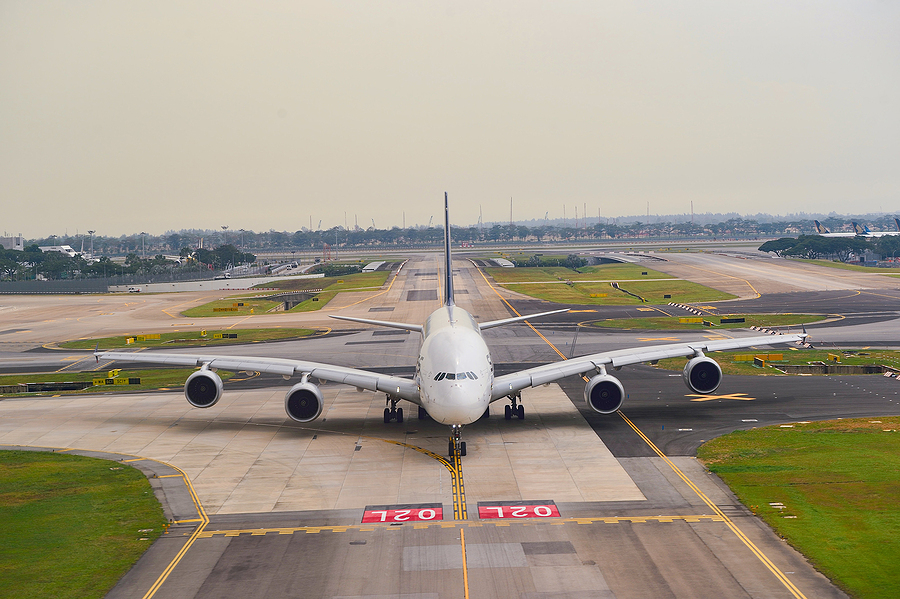
Every time a plane touches down at Singapore Changi Airport, something remarkable happens beneath the wheels. A machine weighing hundreds of thousands of kilograms, travelling at nearly 300 kilometres per hour, comes to a complete stop within roughly 2,000 metres. No drama, no fanfare. Just physics, doing exactly what it is supposed to do.
For most passengers, landing is simply the moment they can finally switch their phones back on. But for anyone who has ever sat through an A-level physics tuition session on forces and motion, that screech of tyres on tarmac tells a much richer story.
It Starts Before the Wheels Even Touch
Long before the main landing gear makes contact with Changi's runways, the aircraft is already shedding speed. Pilots extend the wing flaps, increasing drag and lift simultaneously, which allows the plane to fly slower without stalling. Spoilers on the wings pop up to deliberately disrupt airflow, reducing lift and pushing the aircraft downward onto the runway. Air resistance, often treated as a nuisance in textbook problems, becomes a useful tool here.
It is also worth noting that the conditions inside the plane during descent, including aeroplane cabin pressure, are carefully managed separately from the aerodynamic forces happening outside. The two systems operate in parallel, each engineered for passenger safety in its own way.
The Physics of Braking
Once the wheels touch down, three main systems take over to bring the aircraft to a stop: wheel brakes, thrust reversers, and runway surface design. Each one draws on core physics principles.
Wheel Brakes and Friction
Aircraft brakes work through friction, the same force you rely on when you press the brakes on a bicycle. Carbon fibre brake discs clamp together under hydraulic pressure, converting the plane's kinetic energy into heat. The amount of braking force generated depends on two things: the normal force pressing the wheels onto the ground, and the coefficient of friction between the tyres and the runway surface.
Changi's runways are constructed with a coarse, grooved texture. These grooves channel away rainwater during wet weather, maintaining strong contact between tyre and tarmac. Without them, a thin film of water could reduce friction dramatically, a phenomenon known as aquaplaning, where the tyre essentially skims across the surface rather than gripping it.
Thrust Reversers
Jet engines are designed to push air backwards to propel the aircraft forward. Thrust reversers redirect that airflow forwards instead, creating a braking force directly from the engines. It is Newton's Third Law made visible: for every action, there is an equal and opposite reaction. By changing the direction of the exhaust, the engines now work against the plane's motion rather than in support of it.
Thrust reversers are most effective at high speed, right after touchdown, when there is plenty of airflow to redirect. Their contribution reduces dramatically as the aircraft slows, which is why brakes carry most of the load during the final stretch.
Runway Length and Deceleration
Physics tells us that the work done by braking forces equals the change in kinetic energy of the aircraft. A heavier plane or one landing at higher speed carries far more kinetic energy, and therefore needs either more braking force or a longer distance to stop safely.
Changi's runways are each approximately 4,000 metres long, well beyond the minimum required for most commercial aircraft. This buffer exists for good reason. If an aircraft lands further down the runway than planned, or if braking systems are less effective due to a wet surface, that extra length becomes critical. It is a safety margin built directly into the geometry of the airport.
Why Runway Surface Design Matters More Than You Think
The material and texture of a runway is not chosen at random. Changi's runways use a specialised asphalt mix that balances durability with grip. Over time, rubber deposits from thousands of tyre impacts can build up and reduce friction, which is why runways are regularly cleaned using high-pressure water jets or chemical treatments.
The grooves cut into the surface, typically about 6 millimetres wide and 6 millimetres deep, are spaced to match the drainage needs of Singapore's heavy tropical rainfall. During a downpour, water is quickly pushed away from the contact patch between tyre and runway, keeping friction levels consistent and predictable.
Stopping Is a Team Effort
What makes aircraft stopping so fascinating from a physics standpoint is that no single system carries the full load. Brakes, thrust reversers, aerodynamic drag, and runway design all contribute, and their relative importance shifts as the plane decelerates.
At 250 km/h, aerodynamic drag and thrust reversers do the heavy lifting. By the time the aircraft slows to 80 km/h, wheel brakes have taken over almost entirely. Engineers design these systems to complement each other, ensuring that if one is less effective, the others can compensate.
This interplay of forces reflects the kind of real-world complexity that makes physics so much more interesting than it sometimes appears on paper.
Take Your Physics Further
The next time you land at Changi, you are not just arriving at one of the world's best airports. You are witnessing applied physics at scale, where friction, momentum, Newton's laws, and materials science combine in a matter of seconds to keep you safe.
If moments like this make you curious about the physics behind everyday life, that curiosity is worth nurturing. Our physics tuition programmes are taught by experienced tutors who make complex concepts genuinely click. Visit Physics.com.sg to find out more and take the next step in your physics journey.