Exploring Acoustic Principles Behind Noise Cancellation
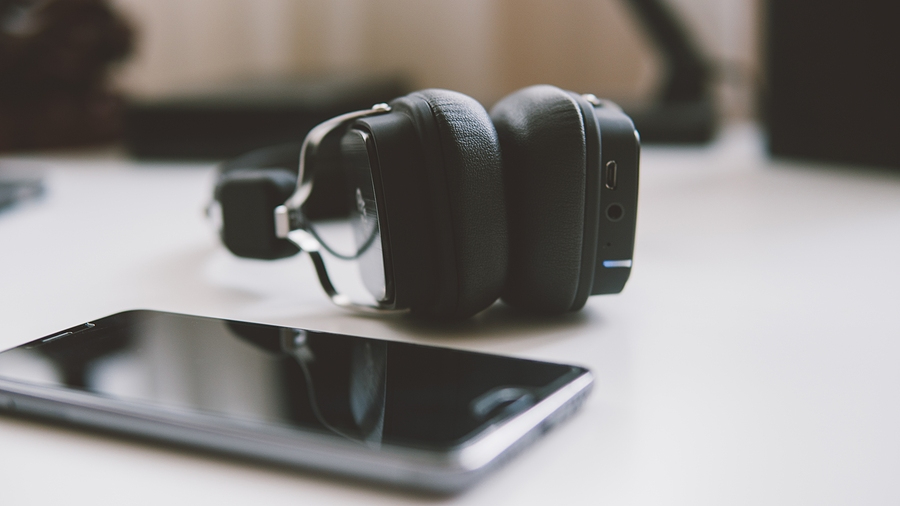
Noise is a constant in our modern world. Whether you are in a bustling café, commuting on a train, or trying to concentrate at home, unwanted sounds can intrude and disrupt focus. Advances in acoustics and signal processing have given rise to noise cancellation technologies that mute those distractions.
Read on as we delve into the acoustic principles underlying noise cancellation.
What Is Sound And Why It Matters
Sound is a pressure wave that propagates through a medium such as air. A vibrating object creates alternating compressions and rarefactions; these fluctuations travel as longitudinal waves. Key parameters of a sound wave include frequency (how many oscillations per second, measured in hertz) and amplitude (which relates to loudness, often expressed in decibels). Students exploring this topic through physics tuition in Singapore often find that understanding these core concepts builds a strong foundation for advanced studies in acoustics and wave phenomena.
When multiple waves coexist, they interact by superposition. That means the instantaneous pressure variation is the sum of contributions from all waves. This gives rise to interference phenomena: when two waves of equal amplitude and opposite phase coincide, they cancel each other out; a principle central to active noise cancellation.
But real ambient noise is rarely a pure tone. Instead, it is a complex blend of frequencies, modulations, and transient components. Thus, cancelling noise is not just a matter of inverting one wave, but of dynamically analysing and counteracting multiple overlapping signals.
Passive Versus Active Noise Control
Before exploring active techniques, it helps to distinguish them from passive methods.
Passive noise control (or isolation) relies on physical barriers and acoustical materials. These include insulating layers, acoustic foam panels, mufflers, or well-designed earcup seals. They absorb, reflect or scatter incoming sound, thus attenuating it. Passive methods tend to be more effective at higher frequencies and are less effective at lower, long-wavelength noise.
Active noise control (ANC), by contrast, uses electronics: microphones, signal processors, and speakers to actively generate sound waves that counteract unwanted noise via destructive interference. Because they can dynamically adapt, ANC techniques excel at reducing low-frequency, steady noises such as engine hum, air conditioners, or drone sounds.
In practice, high-end systems often combine passive and active methods to cover broad frequency ranges and reduce both high and low noise components.
Destructive Interference: The Core Idea
At the heart of active noise cancellation lies destructive interference. If you generate a sound wave that is the same amplitude but inverted in phase (i.e. 180° out of phase) relative to the unwanted sound, the two waves add to zero (or near zero). In effect, the noise is “cancelled.”
However, implementing that in practice is far from trivial. Some challenges include:
- Time delays: It is crucial that the anti-noise wave arrives in time to overlap the unwanted sound appropriately. Latency in digital processing, conversion delays, or acoustic path delays must be compensated.
- Amplitude matching: The anti-noise amplitude must match the unwanted noise precisely. Too low, and cancellation is incomplete; too high, and it may amplify residuals or create new artefacts.
- Dynamic variation: Ambient noise is seldom stationary. The system must continuously monitor changes in noise and update the anti-noise wave in real time, often using adaptive algorithms.
- Secondary path effects: The path from anti-noise speaker to the listener (or to the error microphone) itself can introduce filtering, frequency response distortion, or delay, complicating the cancellation.
Engineers typically deploy adaptive filters, such as variations of the least mean squares (LMS) algorithm, to handle dynamic noise environments. The system continually adjusts coefficients to minimise the error between the residual noise and target silence.
System Architectures: Feedforward, Feedback, Hybrid
Designers of ANC systems often adopt one of several architectures depending on application constraints.
- Feedforward ANC: A reference microphone picks up incoming noise before it reaches the listener. The system then computes an anti-noise signal and emits it via a speaker to cancel the noise. This arrangement tries to anticipate the noise before it arrives.
- Feedback ANC: Here, a microphone senses residual noise close to the listener’s ear. The system uses that feedback to generate corrective anti-noise. This is more reactive but can stabilise cancellation in some cases.
- Hybrid ANC: Combines feedforward and feedback paths to leverage the benefits of both. This often gives more robust performance across frequency bands and in nonstationary noise scenarios.
- Adaptive (self-tuning) ANC: Whatever architecture is used, embedding adaptive algorithms helps manage changing noise profiles, reflection paths, and room acoustics.
In headphones or earbuds, the processing is local. In applications such as vehicle cabins or large enclosures, multiple microphones and speakers may be distributed to create zones of low noise.
Limitations And Practical Considerations
While noise cancellation is powerful, it is not a perfect magic wand. Some limitations include:
1. High-frequency noise: Because wavelengths become very short at high frequencies, generating perfectly inverted waves with tight spatial matching becomes impractical. Passive insulation often works better for high frequencies.
2. Rapid transients: Sudden, impulsive sounds (claps, bangs) are harder to cancel because the system may not respond quickly enough to predict or generate precise cancellation.
3. Complex acoustic environments: Reverberation and reflections cause multiple overlapping paths. The cancellation must cope with both direct and reflected waves, making the adaptive filtering more complex.
4. Power and cost: Real-time digital signal processing and high-quality microphones, DACs, and amplifiers cost power and increase complexity. In large spaces, scaling becomes challenging.
5. Residual artefacts: Imperfect cancellation can leave behind distortion, phase mismatch, or audible “hiss” especially in quiet segments.
Nevertheless, when carefully designed, noise cancellation can significantly improve auditory comfort, reduce fatigue, and enhance intelligibility in noisy settings.
Applications And Use Cases
Noise cancellation finds application in many areas:
- Headphones and earbuds: Probably the most familiar use. ANC allows users to enjoy audio content without turning up volume dangerously in noisy environments like flights or public transport.
- Automotive cabins: Some luxury vehicles incorporate ANC systems to cancel engine, tyre or wind noise inside the passenger compartment.
- Ducts and HVAC systems: In ventilation systems, ANC can reduce tonal noise from fans or air flow.
- Industrial machinery: For periodic noise sources such as compressors or motors, narrowband ANC systems help reduce occupational noise exposure.
- Interior spaces: In rooms, localised ANC (sometimes in seating zones) can create quiet zones, though the diversity of noise sources and reflections makes this demanding.
- Telecommunications and conference systems: Acoustic echo cancellation (AEC) is a related technology that suppresses echoes in telephony or video conferencing by subtracting a filtered version of a large signal from the microphone input.
These technologies are increasingly relevant to education and study environments. Students wearing noise-cancelling headphones may concentrate better in noisy dorms or study halls.
From Theory To Practice: A Simple Example
Imagine a plane cabin with a constant low hum at, say, 500 Hz. A microphone placed near the listener picks up that hum. The system computes a waveform that is the same amplitude but inverted in phase and plays it back via small speakers in the earcup. Because the anti-noise and hum combine, the perceived sound is much reduced.
But real noise includes many frequencies. The system uses fast Fourier transforms (FFT) or filter banks to decompose the incoming sound into frequency components. Then adaptive filters adjust gain and phase in each band to generate appropriate anti-noise. This process repeats many times per second to keep up with noise changes.
Engineers also calibrate for delays and secondary paths: the system must account for the time it takes the anti-noise speaker output to reach the listener and adjust delays accordingly.
Conclusion
Noise cancellation is an elegant marriage of acoustic physics and real-time signal processing. Drawing on principles of destructive interference, superposition, adaptive filtering, and microphone-speaker control, modern systems can suppress unwanted sound in dynamic environments. While limitations persist, ongoing advances are pushing the envelope in active control, spatial filtering, and hybrid systems.
At Physics.com.sg, we are always keen to share and demystify advanced physics applications, do explore our blog and resources for more articles and ideas.