Artemis II and the Physics of Deep Space Navigation
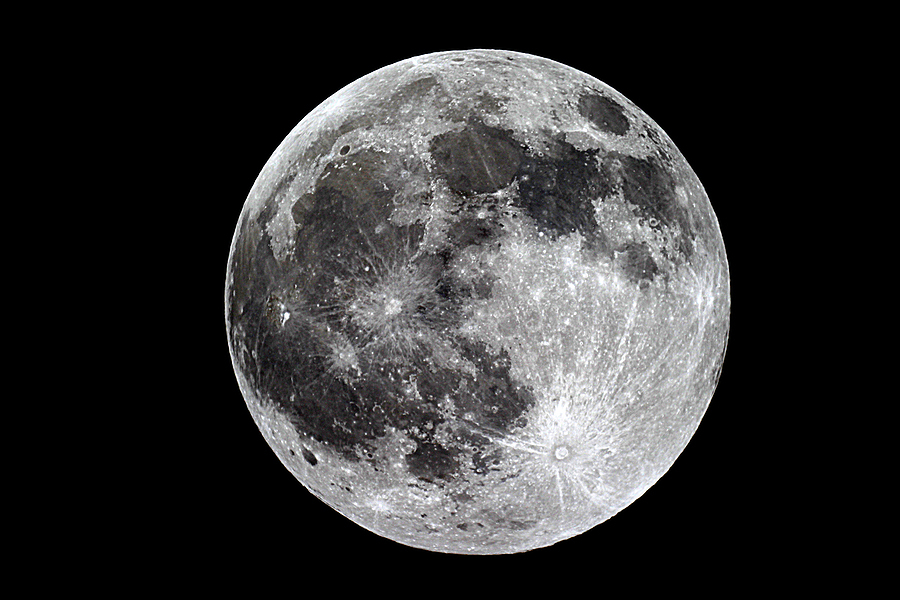
Space has always had a way of capturing our imagination, no matter where in the world we happen to be watching from. Over the past few weeks, Artemis II has dominated conversations well beyond the United States, and Singapore has been no exception. People have been talking about the four astronauts who made history by travelling farther from Earth than any humans have ventured in over 50 years. The buzz here has been real, with local science communities, university forums, and secondary school physics teachers all taking the opportunity to bring the mission into the classroom and beyond.
So, What Actually Happened on Artemis II?
NASA's Artemis II launched from Kennedy Space Center's Launch Complex 39B on 1 April 2026 at 6:35 p.m. EDT. The four astronauts flew around the Moon in a 10-day figure-eight trajectory, coming within approximately 4,047 miles of the lunar surface before returning to Earth. The Orion spacecraft completed a 694,481-mile journey before safely splashing down, marking the first crewed test flight under the Artemis programme.
But beyond the spectacle of the launch and the triumph of the splashdown, what really makes this mission fascinating is the physics that made it all possible. This is not just rocket science in the colloquial sense. It is a brilliant, real-world demonstration of the principles that physics students encounter every day in their textbooks.
The Physics of Getting There
To understand how Orion made its way to the Moon and back, it helps to start at the beginning: getting off the ground.
To leave Earth's gravitational influence, a spacecraft must reach escape velocity, approximately 25,000 mph from Earth's surface. The Space Launch System did not need to hit that speed all at once. Instead, it placed Orion into a parking orbit first, then a second burn sent the spacecraft on a translunar injection trajectory, a carefully calculated path that intersects with the Moon's position days later.
Think of it like throwing a ball not at where a moving target is now, but where it will be by the time the ball arrives. The mathematics behind this is orbital mechanics, and it is one of the most elegant applications of Newtonian physics in existence.
The translunar injection burn lasted five minutes and 49 seconds, changing the spacecraft's velocity by 1,274 feet per second. That single burn was enough to send four people on a journey to the Moon. The idea that humans can float in space hundreds of thousands of miles from home, kept alive by carefully engineered systems, still feels extraordinary when you stop to think about it.
The Free-Return Trajectory: Gravity as Your Safety Net
One of the most beautiful concepts at play in Artemis II is the free-return trajectory. A free-return trajectory is a flight path where the spacecraft uses a single engine burn to head toward the Moon, then relies entirely on gravity for the rest of the trip. The Moon's gravity slings the spacecraft around and redirects it back toward Earth, with no additional engine burns needed to return home.
This is not a new idea. This trajectory was used on Apollo 13 as an emergency measure. For Artemis II, it was the planned route. It is a masterclass in working with the laws of physics rather than against them. Rather than fighting gravity, mission planners used it as a tool, letting the combined gravitational fields of the Earth and Moon do the heavy lifting.
The mission used the gravity of both the Earth and the Moon to naturally guide the crew home. From a physics perspective, this is conservation of energy and gravitational potential in action, the same concepts covered in A-Level and IB Physics syllabuses here in Singapore.
Navigation Without GPS
Here is something that surprises most people: GPS does not work in deep space. So how did Orion know where it was?
Orion's guidance, navigation, and control system uses star trackers that measure the positions of stars to determine the spacecraft's orientation, combined with inertial measurement units containing gyroscopes and accelerometers. In essence, the spacecraft navigates the way ancient sailors once did, by looking at the stars, but with extraordinarily precise instruments and computing power.
On top of that, NASA's Deep Space Network provided radio tracking from Earth, allowing mission controllers to calculate Orion's position and velocity with remarkable accuracy. Small trajectory correction burns could then be made as needed to keep the spacecraft on course. It is a layered navigation system, and every layer relies on physics.
Surviving the Return: The Heat Shield
Coming home from the Moon is arguably the most dangerous part of the journey. The Orion spacecraft's heat shield was designed to handle temperatures of 5,000 degrees Fahrenheit as the capsule re-entered Earth's atmosphere at around 24,700 mph.
At those speeds, the air in front of the spacecraft cannot move out of the way fast enough. It compresses and heats up to temperatures hotter than the surface of the Sun. The heat shield absorbs and dissipates that energy, protecting the crew inside. This is thermodynamics and fluid dynamics working together under the most extreme conditions imaginable.
Orion carried astronauts farther from Earth than any human spacecraft in history, travelling more than 695,000 miles and completing a precise lunar flyby of the Moon's far side. That it returned everyone safely is a testament to decades of applied physics research and engineering.
Why This All Matters for Physics Students
Artemis II is not just a news story. It is a living, breathing physics lesson. Every stage of the mission connects directly to concepts students are learning right now: Newton's laws of motion, gravitational fields, orbital mechanics, energy conservation, thermodynamics, and wave-based communication systems.
When you watch a rocket launch, you are seeing Newton's Third Law at full scale. When you read about the free-return trajectory, you are looking at gravitational potential energy in practice. When you hear about star trackers and inertial measurement units, you are seeing vectors and angular momentum applied in the real world.
Space missions like Artemis II are a reminder that physics is not abstract. It is the reason four people made it to the Moon and back.
Ready to Take Your Physics Further?
If Artemis II has sparked your curiosity about the physics behind space exploration, there has never been a better time to deepen your understanding. Whether you are preparing for O-Levels, A-Levels, or the IB, having the right guidance can make all the difference.
Visit Physics.com.sg to find out more about our Physics tuition services in Singapore. With experienced tutors who bring real-world examples like these into every lesson, you will not just learn physics. You will understand it.