4 Easy Ways to Turn Hari Raya Into a Learning Opportunity
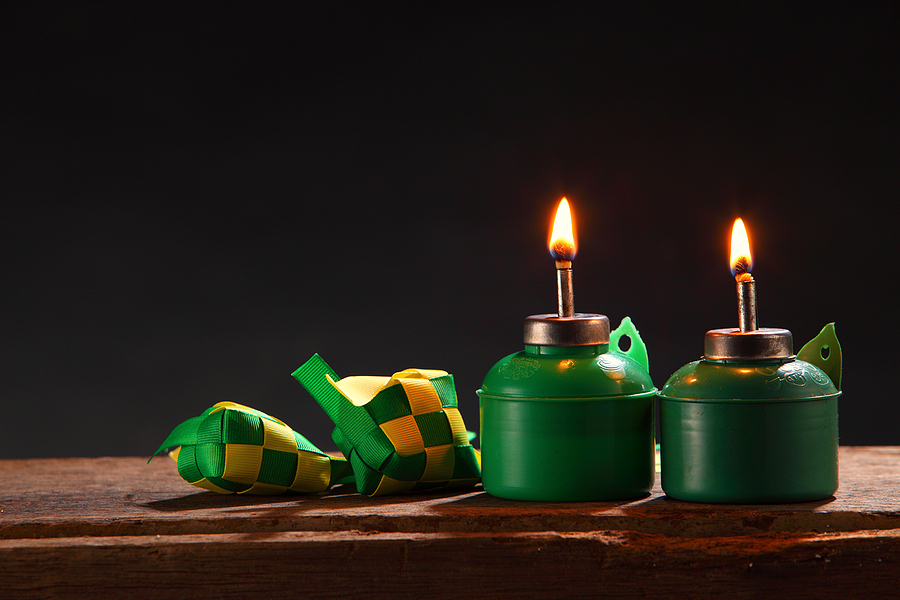
Hari Raya is a time for celebration, reflection, and togetherness. Homes are filled with the smell of rendang and kuih, new outfits are laid out neatly, and family members travel across the island to visit loved ones. Children look forward to duit raya and long conversations with cousins they may not have seen in months.
Yet beyond the excitement, Hari Raya also offers something else: real-life learning moments.
Learning does not always have to come from worksheets or revision books. Some of the best lessons happen naturally, when children are curious and relaxed. With a little intention, you can turn festive moments into meaningful educational experiences without making it feel like “studying”.
Here are four easy ways to do just that.
1. Talk About the Science Behind the Moon
Hari Raya Puasa marks the end of Ramadan, and its start is traditionally determined by the sighting of the new moon. The concept of the Eid moon sighting can spark fascinating conversations at home.
You can ask simple questions:
- Why does the moon look different each night?
- Why is it sometimes a thin crescent and sometimes full?
- Why can’t we see it during the day all the time?
This opens the door to understanding lunar phases, the Earth’s rotation, and how the moon reflects sunlight. Older children can explore how the Islamic calendar follows a lunar cycle, which is why Hari Raya shifts earlier each year on the Gregorian calendar.
You do not need a telescope. Even stepping outside in the evening and observing the sky together can lead to rich discussions about astronomy. When children connect what they see to scientific concepts, learning becomes concrete rather than abstract.
For families with older students preparing for exams, linking everyday observations to structured support, such as Physics tuition, can reinforce these ideas. A good tutor helps students connect classroom theories with real-world phenomena; something as simple as the moon becomes a gateway to understanding circular motion and gravitational forces.
2. Use Cooking as a Mini Science Lab
Hari Raya kitchens are busy places. From baking pineapple tarts to simmering beef rendang, there is plenty happening behind the scenes.
Cooking is chemistry and physics in action.
When dough rises, yeast produces carbon dioxide. When you fry kuih, heat transfers from oil to batter. When sugar caramelises, molecules break down and recombine to form new compounds.
Invite your child into the kitchen and ask:
- Why does oil splatter when there is water on the food?
- Why do some ingredients dissolve while others do not?
- Why does steam rise?
These are not trick questions. They encourage observation and reasoning. Even younger children can grasp ideas about heat, states of matter and energy transfer through simple explanations.
You do not have to turn every cooking session into a lecture. A quick comment like, “Notice how the butter melts faster on a hot pan,” plants a seed. Over time, these small moments build scientific awareness.
Students who struggle in school often feel that science is disconnected from real life. When they see it in everyday experiences, concepts become less intimidating and more logical.
3. Turn Visiting Into a Lesson in Organisation and Planning
Hari Raya visits often involve carefully planned routes across Singapore. One family in Tampines in the morning, grandparents in Jurong in the afternoon, relatives in Woodlands in the evening.
This is a great chance to teach planning, time management and even basic mathematics.
You can involve your child in:
- Estimating travel time.
- Planning the most efficient route.
- Calculating fuel costs or public transport fares.
- Comparing distance between locations.
Older students can think about speed, distance and time relationships. If you travel by car, you might ask, “If we travel at 60 km/h, how long will it take to reach our next stop?”
These are practical applications of formulas they learn in school.
More importantly, it shows them that maths and science are not just exam topics. They are tools used daily.
Children who understand the “why” behind what they study tend to feel more motivated. Instead of memorising equations, they start to see purpose.
4. Encourage Reflection and Communication Skills
Hari Raya is also about gratitude, forgiveness and strengthening relationships. When children greet elders and ask for forgiveness, they practise humility and emotional awareness.
After a day of visiting, you might sit down and reflect together:
- What did you learn from your grandparents’ stories?
- What traditions are important in our family?
- Why do we celebrate this way?
This builds critical thinking and communication skills. Being able to articulate thoughts clearly is just as important as solving equations.
If your child shares something interesting they noticed, perhaps the way traditional houses are designed to stay cool, you can extend the conversation into topics like ventilation, airflow and heat transfer.
Suddenly, architecture links back to science again.
Learning becomes interconnected rather than compartmentalised.
Why This Matters More Than We Think
Academic pressure in Singapore is real. Many students see learning as stressful and performance-driven. Festive seasons offer a rare pause and a time when families slow down and reconnect.
By gently integrating educational conversations during Hari Raya, you send a powerful message: learning is part of life, not separate from it.
When a child looks at the crescent moon and understands its significance both culturally and scientifically, they feel empowered. When they calculate travel time between relatives’ homes, they realise maths is practical. When they observe steam rising from a pot of rendang and connect it to heat transfer, physics feels less abstract.
Over time, these moments build confidence. And confidence changes everything.
A Small Shift, A Big Impact
You do not need expensive tools or elaborate plans. You only need awareness.
Festive seasons are full of teachable moments:
- The moon in the sky.
- The bubbling pot in the kitchen.
- The journey across the island.
- The stories shared over dinner.
Each one holds the potential to spark curiosity.
When children grow up seeing the world as something to question and explore, academic success follows naturally. They stop memorising blindly and start thinking critically.
That mindset lasts far beyond Hari Raya.
Conclusion
Hari Raya is a celebration of renewal. It marks the end of a month of discipline and reflection, and the beginning of joy and gratitude. By turning small moments into learning opportunities, you nurture not only your child’s academic growth but also their sense of wonder.
If your child would benefit from structured guidance that connects real-life experiences with exam-ready understanding, explore the programmes available at Physics.com.sg. A strong foundation in concepts, paired with curiosity about the world, makes all the difference.